
-
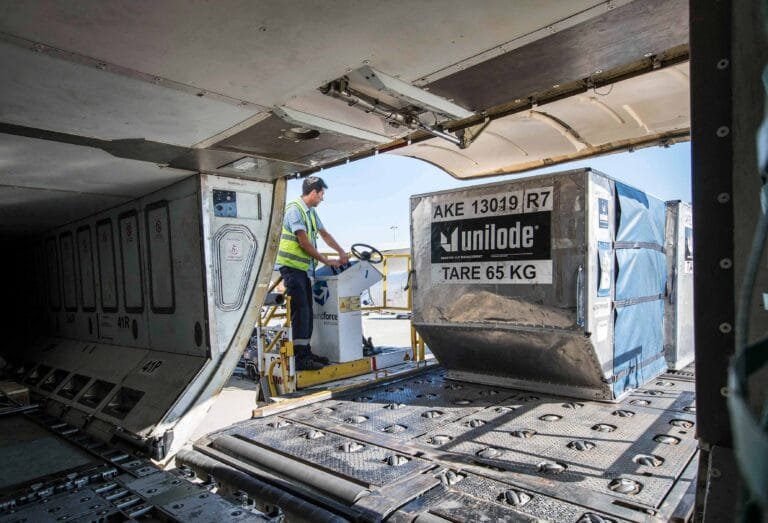
Airlines are shifting to unit load device (ULD) pooling as a cost-effective and sustainable alternative to owning ULD fleets, with Unilode leading the market through its 200,000-strong shared asset network.
-
Digitalisation is driving the model’s success, with IoT-enabled ULDs offering real-time tracking, predictive maintenance, and reduced downtime across nearly 1,300 airports.
-
The pooled approach supports circular economy goals by reducing ULD production, cutting repositioning emissions, and refurbishing units through Unilode’s global MRO network.
Airlines are increasingly turning to unit load device (ULD) pooling as a smarter way to manage costs and carbon. What was once considered a niche model has become the standard approach for airfreight and passenger carriers alike.
“Over the past decade, ULD pooling has evolved from a niche concept to the industry standard for airlines and cargo operators,” said Mohammed Akhlaq, Unilode’s Chief Commercial Officer. “Pooling is delivering proven value, reducing costs, optimising utilisation, and supporting sustainability.”
With more than 200,000 ULDs across its global network, Unilode provides carriers with access to shared fleets that reduce idle assets, minimise repair costs, and give operators the flexibility to scale up or down in response to seasonal peaks or sudden disruptions. As Mohammed explained, “Pooling is viewed not as a compromise but as a smarter, more sustainable, and transparent way to operate.”
Sharing assets, reducing costs
The appeal of pooling lies in its clear financial logic. Airlines traditionally tied up significant capital in owning and maintaining their own fleets. By contrast, a pooled model allows them to “only pay for what they use.” Airlines that join Unilode’s network have reported reducing their ULD inventories by up to 20 percent, freeing up capital and eliminating the need for additional fleet purchases.
Maintenance costs are also significantly reduced. Through Unilode’s global network of 50 certified repair stations, strategically positioned at key hubs, airlines no longer need to fund their own repair infrastructure. “This eliminates unexpected maintenance expenses and removes the need for airlines to invest in their own facilities,” Mohammed noted.
Digitalisation drives reliability
Pooling’s growing success is being propelled by rapid advances in digital technology. Unilode’s IoT-enabled tags, sensors, and reader network—now installed at nearly 1,300 airports worldwide—allow real-time visibility of each ULD’s location, condition, and maintenance status.
Through Unilode’s e-ULD app and Customer Portal, operators can access live data on their assets, track performance, and make informed operational decisions. Predictive maintenance tools ensure repairs are scheduled proactively, cutting downtime and extending each unit’s lifespan.
“By the end of 2025, almost 95 percent of Unilode’s 200,000 ULD fleet will be fully digitalised,” Mohammed said. This digital backbone turns the pooled network into an intelligent, connected ecosystem, enabling predictive maintenance, minimising loss, and ensuring ULDs are always in the right place at the right time.
Sustainability and the circular economy
As aviation faces growing pressure to decarbonise, pooling offers a tangible path to progress. Shared ULD fleets reduce the number of units manufactured, lowering raw material use and associated emissions. Optimised redistribution cuts repositioning flights and fuel burn, contributing to a 15 to 25 percent reduction in CO2 per unit.
This circular approach extends through Unilode’s global maintenance, repair, and overhaul (MRO) network—the largest of its kind in the world—where damaged units are refurbished and returned to service rather than scrapped. Standardised repair processes across the network improve efficiency, reduce waste, and extend each ULD’s lifecycle.
Mohammed highlighted Unilode’s broader sustainability initiatives, which include a 10 percent emissions reduction target for 2026, expansion of renewable energy, and the introduction of electric ground support equipment. The company’s salvage and parts reuse programme alone has saved nearly 27,000 kg of CO2 equivalent to date. “Pooling transforms ULDs into long-lasting, high-utilisation assets, supporting sustainability and lowering costs,” he said.

