
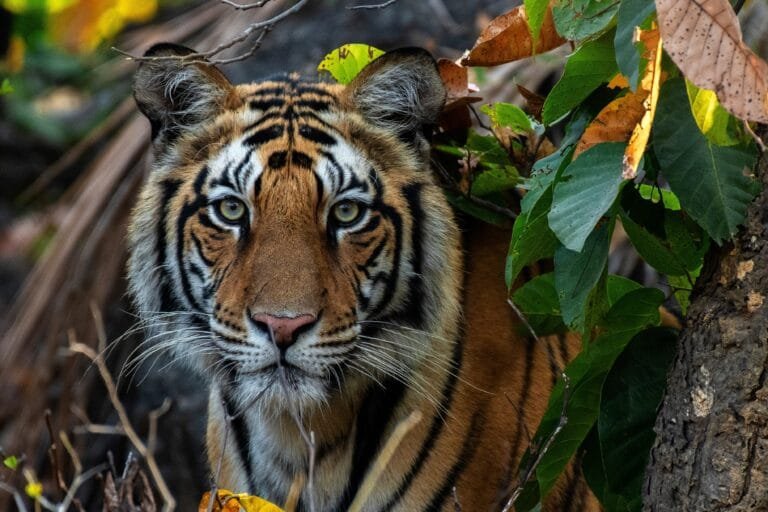
- Wild tigers are on the brink, with fewer than 3,200 left in the wild and thousands suffering in cruel captivity across Asia and the US, fueling illegal trade and exploitation for entertainment, meat, and traditional medicine.
- Tiger farms and exotic pet trades are worsening the crisis, offering a façade of legality while driving poaching and habitat loss—causing extinction in nations like Cambodia, Laos, and Vietnam.
- While laws like the Big Cat Public Safety Act and IATA’s Live Animals Regulations aim to protect wildlife, WWF urges nations to shut down tiger farms and curb demand, before the world’s most iconic predator disappears forever.
One of nature’s most magnificent creations is in mortal danger from commercial exploitation, mostly illegal and in totally unsuitable conditions. According to the latest WWF estimates, 100,000 wild tigers existed in the early 1900s, compared with today’s estimate of only 3,200. Around 9,000 captive tigers are held in over 300 places of captivity in East and Southeast Asia, many of which are in China, but they are also located in Thailand, which has around 1,600. Laos keeps about 450 captive tigers and Vietnam around 395. WWF and TRAFFIC’s 2020 Falling through the System report showed the role of the EU and UK in legal and illegal trade, with at least 850 tigers in captivity.
Some tigers are held captive for human entertainment, while others feed the growing market for body parts, claws, flesh, bones, and other parts to supply the meat industry or the traditional medicine industry. In the US, there are estimated to be around 5,000 captive tigers, mostly held by untrained private owners lacking the special resources and veterinary skills necessary for wild animal health, making the animals vulnerable to disease. Big cats forced to pose with tourists are usually drugged to make them placid. Often these facilities allow public contact with the tigers, including photo opportunities and playtimes with tiger cubs—a health risk for both humans and the animals. Sadly, when the cubs reach maturity and have grown too large and dangerous to handle, many may be sold to roadside zoos, enter the illegal exotic animal trade, or be slaughtered for their body parts.
The impact of captive tiger trade
The exotic “pet” trade is big business and includes a wide variety of mammals, birds, and marine creatures, all of which are forced to survive in unnatural and often alien environments, while cruel breeding practices cause animals horrendous suffering. Restricting a large predator to such conditions causes misery for the animal. Tiger farms do not contribute to wild tiger conservation. Although captive tiger facilities may be legal, they are mostly unregulated in Asian countries. Significantly, countries in Southeast Asia that have allowed tiger farms within their borders are experiencing the greatest declines in their wild tiger populations. In the past 20 years, tigers have become extinct in Cambodia, Lao PDR, and Vietnam.
CITES, the Convention on International Trade in Endangered Species, is an international trade agreement designed to facilitate trade in threatened species in a regulated way. It is not a criminal justice agreement, nor is it an animal welfare agreement, but only regulates cross-border trade in the 41,000-odd species listed on its appendices (roughly 6,600 species of animals and 34,300 species of plants). It has no jurisdiction at a domestic level. The CITES Secretariat has played a major role in the Global Tiger Initiative (GTI), which is supported by the World Bank. CITES is the only international agreement designed exclusively to regulate wildlife trade, which it does by trying to ensure the legality, sustainability, and traceability of any international trade transaction involving the species it covers. Around 184 countries are signed up as “Parties” and are legally committed to implementing the Convention through their own national legislation. There are also potential penalties for Parties that fail to adhere to the Convention, in the form of trade sanctions and suspensions.
Global and national efforts to protect tigers
In 2022, the Big Cat Public Safety Act (BCPSA) was signed into law, in what is seen as a significant policy success by organisations such as WWF US, which have been advocating for the legislation for over ten years. The BCPSA will reduce the risk of tiger parts from the US entering the illegal wildlife trade while also improving public safety and tiger welfare by requiring facilities to obtain a federal permit for big cat ownership. When fully enforced, this should help address the above concerns.
WWF and TRAFFIC’s 2020 Falling through the System report showed the role of the EU and UK in legal and illegal trade, with at least 850 tigers reported to be in captivity. Overall, poaching, loss of habitat, and the illegal trade in animal parts are the worst threats to dwindling tiger populations’ main species, including Bengal, Siberian, and Sumatran tigers. Tiger farms legitimise the use and purchase of tiger parts and products, putting even more pressure on wild tigers. The parts from tiger farms, both legal and illegal, are difficult to identify, raising questions about which parts come from poached wild or captive-bred tigers, providing a screen for possible criminal trade. WWF is calling on countries that currently have tiger farms to put in place a clear plan and timeline to phase out these farms.
What are the airlines, handlers, and agents doing to play their part in curtailing this tragic and often illegal trade? The IATA Live Animals Regulations (LAR) set the global standard for animal transport by commercial air. These comprehensive guidelines cover container specifications, feeding, watering, ventilation, and handling procedures to ensure the safe and humane transport of various animals, including pets and those for agricultural or zoological purposes. Combatting the illegal trade, however, falls largely to the vigilance of Customs officers and, to some extent, handling agents.
Examples of restricted items include animal by-products and some live animals: wild birds, land or marine mammals, reptiles, fish, shellfish, molluscs, or invertebrates; including any part or product of the above, such as skins, tusks, bone, feathers, or products or articles manufactured from wildlife. Unfortunately, like all illegal activities and products, it is human greed and appetite that allow such trade to flourish, while our dwindling wildlife populations continue to suffer.
