
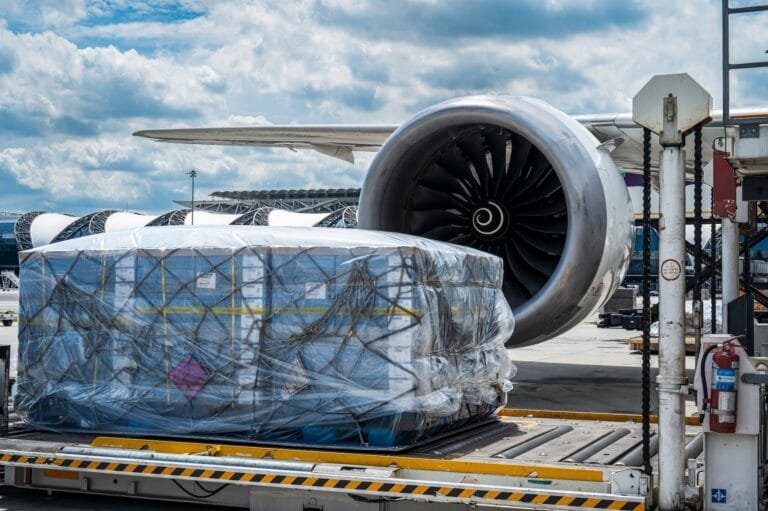
- Air Partner is shaping the next generation of air cargo talent through its 3E model of Education, Experience, and Exposure, combining training, real-world immersion, and creative problem-solving to meet evolving industry demands.
- The company prioritises empathy, adaptability, and strategic thinking over pure technical skills, building modular career paths that encourage progression, innovation, and resilience in a technology-driven environment.
- Local recruitment under global standards anchors Air Partner’s growth in new regions, ensuring cultural insight, service consistency, and a workforce ready to deliver time-critical, customer-focused solutions worldwide.
As airfreight continues to evolve under the pressure of digital transformation, regulatory change, and shifting customer expectations, the question of who will drive the industry forward has never been more pressing.
Air Partner recognises the need to enhance strategic thinking across the air cargo workforce. In the company’s view, the industry’s success depends not only on technical know-how but also on the ability to anticipate and interpret client needs in complex, high-stakes environments. “At Air Partner Cargo, we encourage initiative and creativity — candidates must be able to think outside the box and deliver bespoke solutions,” Eliska Hill, Executive Vice President of Cargo at Air Partner, explained.
To equip recruits for the demands of the job, the company uses 3E development model: Education, Experience, and Exposure. This approach blends formal instruction with practical application and immersion in real-world scenarios. It’s a framework designed to ensure that “learning happens through formal training, hands-on practice, and real-world immersion — not just textbooks.”
Technology and humans
As automation reshapes airfreight operations, the industry’s greatest challenge is to recruit professionals who can bridge technology and empathy. “We seek candidates who can bridge both worlds — those who understand systems but also know when to override them for the customer’s benefit,” Hill stated.
While digital tools are transforming everything from booking to tracking, Hill insists that human judgment remains irreplaceable. “Tech skills can be taught; empathy and client focus are harder to instil,” she noted. That principle informs Air Partner’s hiring strategy: prioritising interpersonal skills and then investing in digital upskilling.
To ensure employees evolve alongside technology and regulation, Air Partner structures roles around progression rather than repetition. “We build modular roles with clear progression paths — from operations to customer service to strategic account management,” Hill explains. This design encourages staff to grow with the company’s ambitions, particularly as it expands its time-critical solutions portfolio. “Employees are encouraged to contribute ideas and evolve into roles that didn’t exist five years ago,” she added.
Pressure and precision
In sectors such as time-critical or white-glove cargo, recruitment must go beyond technical competence. “Composure, accountability, and situational awareness are essential,” Hill emphasised. “These roles demand fast thinking, flawless communication, and zero tolerance for error.”
To assess these qualities, Air Partner uses behavioural and situational competency-based interviews that simulate the pressures of real operations. Empathy and ownership also rank highly on the list of desired traits. “We want people who treat every shipment as if it were their own,” Hill said.
The company’s approach is equally defined by its commitment to diversity. “Diversity is a strategic advantage,” she expressed. “We recruit locally to tap into regional insights and fresh perspectives.”
Local talent, global standards
As Air Partner deepens its footprint in the Middle East, local recruitment will be critical. “Local talent is essential for sustainable growth,” Hill affirmed. While the UK team will provide oversight to maintain consistency, the focus will be on engaging professionals who “understand the local landscape and bring global thinking.”
With an established presence in Dubai through its private charter division, Air Partner already has a strong foundation for expansion. Recruitment and training strategies will be “localised, but always aligned with our global standards to ensure consistency in our white-glove service.”
Operational staff remain the immediate priority when entering a new region. “They’re the face of our service and the backbone of execution,” Hill explained. Support functions, meanwhile, are managed through existing offices in Dubai, the UK, and the US.
As competition for talent intensifies, Hill is confident that Air Partner’s reputation for time-critical expertise will help attract candidates. “We position ourselves as specialists in time-critical solutions, not generalists,” she stated. The company’s blend of clear career paths, innovation culture, and global support aims to make it an employer of choice in a fast-changing market.
Ultimately, Air Partner’s recruitment strategy is built on more than filling vacancies — it’s about cultivating resilience and adaptability. “Success isn’t just about filling roles; it’s about building resilient teams that thrive under pressure and grow with the business,” Hill concluded.

