
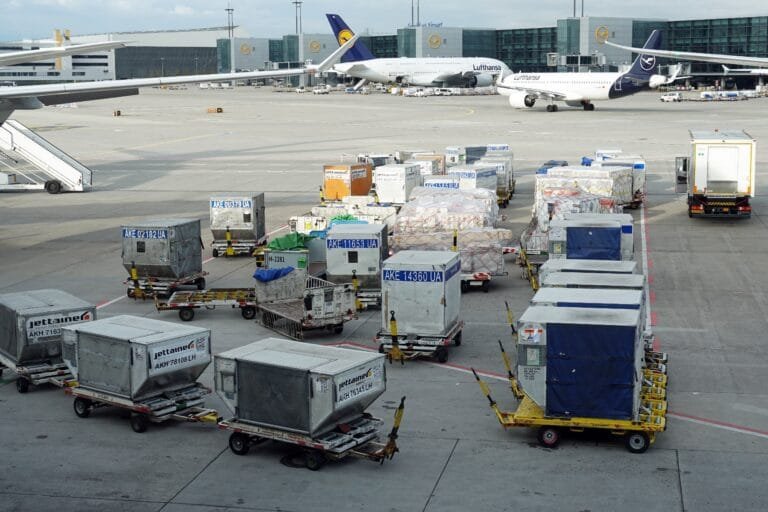
- Germany’s cargo hubs are central to global logistics but face pressure to modernise, integrate digital processes, and create a fully connected supply chain from factory to final delivery.
- Knowledge sharing, collaboration, and a culture of curiosity drive progress, helping companies adopt digitalisation, learn from global best practices, and maintain competitiveness.
- Adaptability is essential as regionalisation, nearshoring, and sustainability trends reshape trade, requiring firms to balance global hubs with niche opportunities while leveraging Germany’s expertise in logistics and digitalisation.
Known for its pivotal role in European and global logistics, Germany’s hubs—including Frankfurt, Munich, Cologne, and Leipzig—remain central to international cargo operations. Yet, the sector faces mounting expectations to modernise processes and embrace efficiency gains.
While individual elements of the supply chain—such as electronic airway bills, slot booking platforms, and trucking coordination—have seen progress, a fully integrated digital ecosystem is yet to be realised. However, without a unified strategy, Germany risks falling behind in an increasingly competitive airfreight market.
“The industry is ready to go for digitalisation, way more ready than it was years and decades ago,” says Marc Oedekoven, Chairman of the Board of the Logistics Alliance Germany. Reflecting on past initiatives such as Cargo 2000. Although, while progress has been made, “there is not really a consistent, holistic digitalisation standard or major global project.”
Oedekoven stresses the importance of non-removable deadlines in driving the industry forward. “Deadlines will help to push everyone in the supply chain to adopt digitalisation. Without them, we risk stagnation.” However, he also acknowledges that past goals have often been missed. “Did they help in the past? I don’t think so.”
Beyond airport-to-airport operations, he highlights the broader logistics chain, from factory pickup to final delivery. “The entire process—from documentation, to trucking, to delivery—needs to be included in the digitalisation of the full supply chain. And yes, there will be challenges, which could be overcome easily with the technology we have today.”
The vision for a fully paperless industry is bold. Oedekoven suggests that even airway bills may be an outdated concept. “No airfreight carrier in this world is keen on having an airway bill. They need the relevant data to process the goods, finance, and logistics—but not the document itself.”
Germany’s role
Germany has long been recognised as a hub for international cargo, with Frankfurt leading the charge. Yet, Oedekoven believes the country must do more than maintain infrastructure. “We see ourselves as facilitators of digitalisation in Germany. We collect knowledge from all over the world and distribute it among our association members. We are not lobbyists; we are here to promote logistics made in Germany and Europe.”
He underscores the importance of knowledge sharing as a tool to strengthen the sector. “When we return from international delegations—to the USA, Silicon Valley, China, or Japan—and share knowledge, our members are curious. They want to learn from others’ approaches, from Amazon, for example. That motivates people to go forward.”
Oedekoven describes the alliance’s approach as a team effort. “In a team, you have people striving to be the best. That pulls the entire team to the highest level possible. Innovation, curiosity, and even a little healthy fear of falling behind are all part of the process.”
Globalisation, resilience, and regionalisation
Despite current geopolitical uncertainties, Oedekoven remains bullish on globalisation. “It’s too big to fail. We have gone too far to turn back, and we should not turn back. There are too many advantages to global trade.” He notes that volatility is nothing new. “We have seen natural disasters, economic crises, September 11. and logistics has always recovered. The freight will always find its way, and logistics will always be the backbone of modern economies.”
At the same time, regionalisation and nearshoring are becoming more prominent. “Sustainability and fuel costs are driving some of these shifts,” he explains. However, Germany’s strength lies not just in physical logistics but in knowledge. “We have built up expertise in logistics processes, digitalisation, and supply chain management. That is something we can export globally, whether to Africa or other emerging markets.”
He also cautions that logistics companies must remain adaptable, balancing global hubs with niche opportunities. “Big players need to be vigilant about markets, products, and regions. Smaller and medium-sized companies often stick to existing traffic and focus on their niches. There will be opportunities if companies are ready to find them.”

