
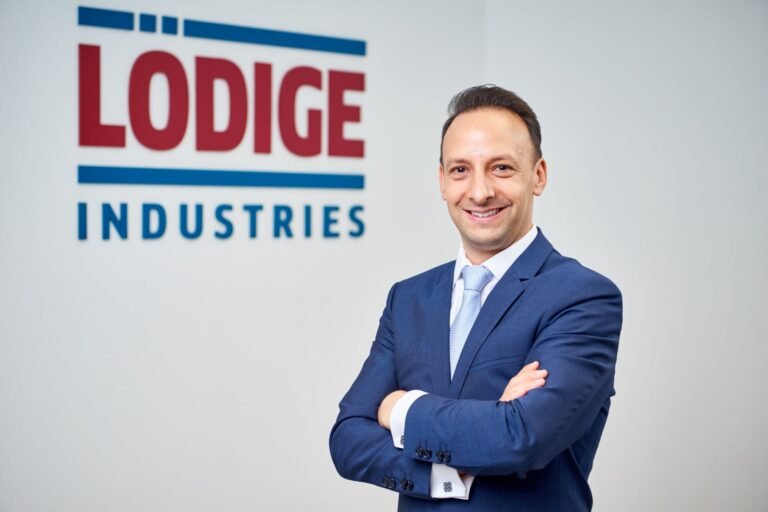
- Lödige Industries says Southeast Asia’s air cargo automation challenge lies not in technology adoption—but in legacy infrastructure, where outdated layouts and manual processes make upgrades costly and complex.
- Phased integration is the key, says Nicholas Tripptree, Managing Director for Asia-Pacific, highlighting Lödige’s Cargo Direct platform as the “intelligent core” that enables terminals to modernise without halting operations.
- Real-world results prove the model: at Vietnam’s SCSC terminal, Lödige expanded capacity mid-operation with zero disruption, while similar retrofits in Shanghai and Hong Kong integrated next-gen automation into existing hubs.
- Cargo Direct delivers efficiency gains of 50 percent or more, optimising freight flow, reducing internal transport, and cutting energy use—all while laying the groundwork for future AI-driven terminal control.
In Southeast Asia’s air cargo terminals, the biggest obstacle to automation isn’t resistance to technology; it’s the infrastructure already in place. For operators working with legacy layouts and semi-manual processes, the ambition to modernise often collides with the realities of cost, operational disruption, and integration complexity.
It’s a pattern Lödige Industries sees repeatedly across the region. “The biggest barrier to faster adoption of automation and smart infrastructure is the challenge of integrating new technologies with ageing systems,” says Nicholas Tripptree, Managing Director for Asia-Pacific at Lödige Industries. “Many terminals require significant modernisation before they can fully embrace automation.”
For cargo hubs facing rising volumes and stricter SLA expectations, this presents a dilemma: how to scale up digitally without pausing operations or overhauling existing facilities. Lödige’s answer is rooted not in hardware, but in orchestration specifically, through its data-driven platform Cargo Direct.
At the core of Tripptree’s vision is phased integration, the ability to deploy intelligent systems alongside existing infrastructure without disrupting operations. “Retrofitting these systems into semi- or fully automated, scalable workflows is essential for boosting throughput,” he says, “but it necessitates detailed planning to ensure minimal disruption to ongoing operations.”
This is more than a talking point. In Vietnam, Lödige completed a major expansion at Saigon Cargo Service Corporation (SCSC) while the terminal remained fully operational. “In 2010, we installed a 20-foot Elevating Transfer Vehicle (ETV) and a 150-bay storage system, designed for scalability to accommodate future growth,” Tripptree explains.
“As SCSC’s business grew significantly a few years later, we integrated a second ETV and an additional 150 storage positions. This phased approach enabled SCSC to efficiently handle increased cargo volumes while maintaining service continuity.”
Similar strategies are followed in China and Hong Kong, where the company has deployed next-gen systems without the need for total reinvention. At Shanghai Pudong, “the first ‘Lift & Run’ system in China” and a heavy ULD AGV system are being integrated into the terminal. In Hong Kong, Lödige’s automated handling infrastructure supports the Cainiao Smart Gateway, part of Alibaba’s international logistics network.
These are not greenfield builds. They’re complex retrofits, and the key to their success, Tripptree argues, is a combination of planning and execution supported by innovative equipment and technology, leveraging years of experience.
What Cargo Direct actually enables
At the centre of this orchestration model is Cargo Direct, a module within the company’s Cargo Professional Suite. “Cargo Direct functions as the intelligent core of the warehouse, serving as a central ‘brain’ that optimises freight flow with real-time precision,” Tripptree says.
The system does not just process data; it utilises it to control the terminal dynamically. “It intelligently directs storage and processing steps, leveraging comprehensive terminal awareness that encompasses layout, available personnel and equipment, as well as freight details such as Air Waybill data, X-ray requirements, and weighing needs.”
Rather than requiring more labour or space, Cargo Direct is designed to generate more throughput within the same footprint. “By integrating Cargo Direct with appropriate automation, terminals can achieve efficiency gains of over 50 percent compared to traditional manual operations,” Tripptree says.
“Cargo Direct optimises the inbound acceptance process by directing freight to the closest possible entry point to its final location, both landside and airside. This dramatically reduces unnecessary internal transport flows within the terminal, leading to faster processing, lower energy use, and reduced operational wear and tear.”
It’s also designed to be operator-friendly. “Cargo Direct streamlines operations with intuitive handheld scanners, enabling operators to scan freight, where all data is automatically recorded and displayed. It is easy to see the next work steps and to confirm and execute.”
Perhaps most critically, the system doesn’t just improve what already exists; it sets the foundation for future advances. “The data generated through this process forms an ideal basis for training AI,” Tripptree says. “In the near future, AI will assist in controlling processes, opening up a wide range of new possibilities.”
As Asia-Pacific cargo hubs push to stay competitive amid surging e-commerce, pharma growth, and geopolitical supply chain shifts, the call for smarter infrastructure is growing louder. But for many airports, the question isn’t whether to automate, it’s how to do so without losing control.
“Technology is constantly evolving,” Tripptree says. “Stakeholders are actively investing in new facilities designed for optimal automation and efficiency. However, the pace of adoption varies across the region.” Some are building from scratch. Others are moving in increments. “Despite these differences, all share a common commitment to embracing technology to meet future needs.”

