
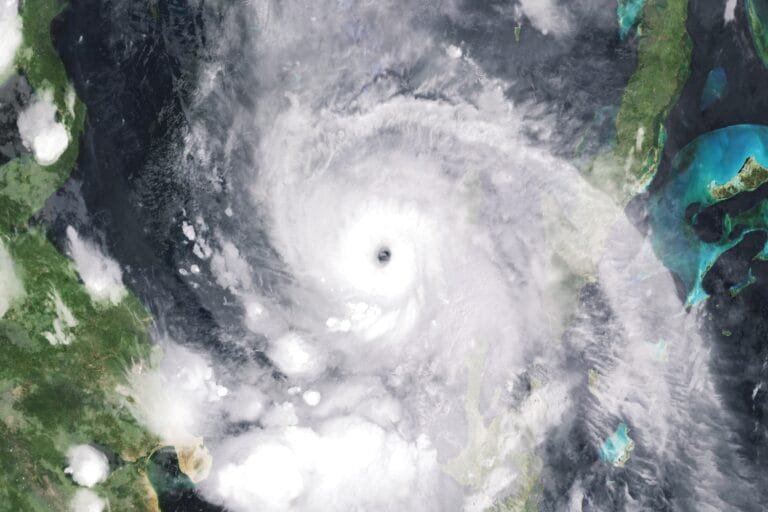
- Chapman Freeborn responded proactively to Hurricane Melissa by mobilising a flexible, brokered fleet and maintaining constant communication with regional operators to coordinate evacuations, humanitarian aid, and critical commercial flights.
- Aircraft selection was carefully matched to mission requirements and austere conditions, using rugged platforms like the AN-12 for cargo drops and ERJ-145s for evacuations, with operations guided by real-time infrastructure and regulatory updates.
- The response highlights a growing need for rapid, specialised charter operations in climate-driven disasters, emphasising pre-positioned aid, diverse fleets, regulatory engagement, and future integration of sustainable fuels and standby contracts.
As Hurricane Melissa battered Jamaica, Chapman Freeborn was already in motion—mobilising a diverse fleet, coordinating with operators, and balancing civil, humanitarian, and commercial airlift needs. Their response offers an inside look at how private aviation brokers are evolving to meet the logistical, regulatory, and operational demands of climate-driven disaster scenarios.
“We took a proactive approach,” said Aniko Mersek, Senior Vice President – Sales. “As soon as we learned about Hurricane Melissa, we reminded our clients of our capabilities, assessed the market, and shared airport openings and NOTAMs. That preparation enabled our clients to make informed decisions—allowing them to be among the first on the ground or safely out of harm’s way.”
Real-time airlift from fragmented ground
Chapman Freeborn’s 24/7 operations team, based in the UK and supported by project personnel in Miami, played a central role in coordinating the deployment across multiple client sectors: government, defence, humanitarian, and commercial.
Permit issues, limited ground staff, and potential fuel contamination—particularly in western Jamaica—posed serious early challenges. But constant communication with regional operators allowed the team to pre-position air assets and monitor changes in infrastructure status almost hourly.
“We continuously monitor new operators and flight filings to identify aircraft that could support our missions,” Mersek explained. “Aircraft availability and airport conditions can change rapidly during hurricane activity.”
Unlike asset-heavy operators, Chapman Freeborn’s broker model meant they weren’t tied to a fixed fleet. “We always stay neutral,” said Mersek. “We can find alternative options if our initial aircraft get booked. We focus first on evacuations, bringing in SAR teams, then charters for the most critical aid.”
Matching mission profiles to rugged aircraft
The aircraft deployed included an ERJ-145 for evacuations, a heavy-lift S-61 helicopter, a Gulfstream G-IV for government liaison travel, and the Antonov AN-12 for cargo drops in damaged areas.
“The AN-12 was designed for these kinds of environments,” said Jack Burt, Senior Vice President of Cargo – Americas. “It can operate in austere conditions without external ground equipment, using a rear-loading cargo door and internal crane system. That meant we could move critical communications gear into areas with compromised handling infrastructure.”
Aircraft suitability was determined by a matrix of variables: airport condition, fuel availability, runway length, cargo specs, and urgency. “Our network and relationships allowed us to assess and secure the right aircraft—fast,” Burt said.
For Cam Bolton-Wilson, Vice President of Government & Humanitarian – Americas, the Melissa response was a chance to refine internal SOPs around disaster deployments.
“Timely information gathering and dissemination is key,” he said. “But we also saw that even with strong comms systems, we needed personnel on the ground to stay aligned with evolving procedures and regulatory changes.”
One major challenge was the last-minute shift in cargo configurations, which impacted flight plans and permit requirements. “We saw that changes in packing lists or pallet sizes could completely reset mission planning,” Bolton-Wilson said. “Where possible, we’ll now move towards scheduled lift ops with fixed seating and cargo capacity that clients can plug into, rather than building new solutions from scratch in every case.”
He also stressed the importance of early engagement with civil aviation authorities, particularly around flight prioritisation. “If cargo flights get priority, but relief goods on a passenger flight are labelled as ‘personal baggage’, that flight might be deprioritised,” he warned.
The future of emergency charter operations
Climate-driven volatility is likely to increase the demand for rapid charter capacity—especially in complex geopolitical or infrastructure-constrained contexts.
“More unpredictable, more specialised missions are coming,” said Bolton-Wilson.
“We expect to see growth in operations tailored to wildfires, medevac, and austere airlifts, possibly requiring mixed fleets with short take-off and landing (STOL), combi, or VLZ capabilities. We’ll also see more integration of sustainable fuels, and standby contracts linked to pre-positioned aid stock.”

