
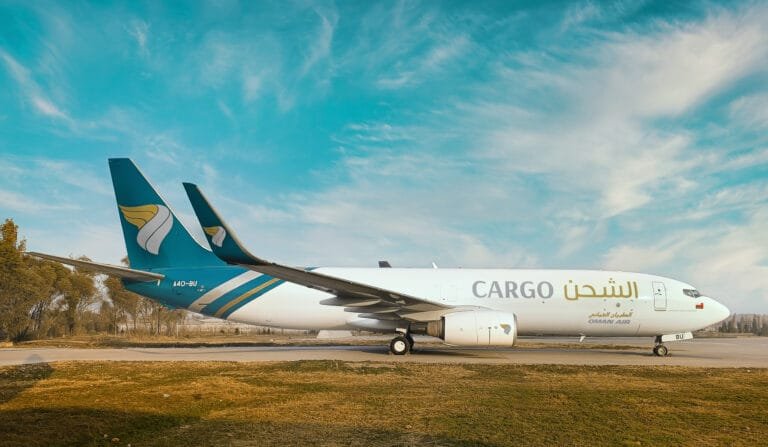
The Middle East has long been a crossroads for trade, but Oman is rapidly carving out a sharper profile in the regional airfreight sector. At the heart of this rise is the premium perishables market, where fresh produce and speciality foods are moving across borders in growing volumes.
“Premium perishables remain at the top,” says Mike Duggan, Head of Cargo at Oman Air Cargo. “Our Amsterdam service, launched in July 2025 with four weekly Boeing 787-9 flights and 14–18 tonnes of cargo capacity each way, has created a direct pipeline for high-value foods such as cheeses and fresh vegetables into the Gulf.”
The route is already proving more than a one-way channel. The combination of inbound European delicacies and outbound South Asian produce underscores Oman’s growing role as a pivot point between suppliers and buyers who demand freshness and reliability. “At the same time, we are seeing growing demand from Europe for premium exports such as mangoes from India, which now move more efficiently through Muscat,” Duggan explains.
The push for direct connections
Changing trade patterns are also helping Oman’s airfreight ambitions. Companies seeking to shorten supply chains and reduce exposure to geopolitical risk are prioritising nearshoring and quicker connections.
Direct routes not only save time but also limit the risks of handling errors, spoilage, or compliance delays. For perishables especially, fewer touchpoints can mean the difference between arriving at peak quality or losing value before reaching store shelves.
“Nearshoring has raised demand for reliable, point-to-point connections. Muscat’s location between Asia, Europe, and Africa makes it a natural bridge,” Duggan says. “Our Amsterdam flights, together with increased frequencies to London Heathrow from winter 2025, give shippers more direct choices, reducing reliance on multi-stop routings.”
European links
The investments are coming together most visibly through Oman’s expanding European links. For Oman, the nation is not only participating in Middle East airfreight but helping redefine its shape. By combining modern fleets, cold-chain infrastructure, and strategic routes, Muscat is positioning itself as a trusted alternative for shippers seeking reliability in a turbulent global landscape.
“Muscat adds choice,” he says. “Our service gives the Gulf direct access to one of Europe’s busiest gateways, while increased London frequencies from winter 2025 strengthen UK links. Together, they support flows of premium perishables such as cheeses, fresh vegetables, and mangoes, reinforcing Muscat’s role as a reliable and efficient hub.”
Sustainability and smarter infrastructure
Oman’s push is not just about geography and routes—it is also about efficiency. With the spotlight firmly on sustainability, modern fleets and streamlined infrastructure are increasingly key to competitiveness.
“Oman Air operates a modern fleet, including Boeing 787 Dreamliners and 737 MAX aircraft, which deliver significant fuel efficiency,” Duggan notes. “The Amsterdam flights use the 787-9, with lower emissions per tonne. On the ground, Muscat’s uncongested terminal reduces trucking and dwell times, helping shippers cut both costs and carbon footprint.”
That integration of air and ground efficiency is being replicated at Oman’s ports. “Oman has a clear advantage with Salalah and Duqm, where bonded corridors link sea and air,” Duggan adds. “Cold-chain infrastructure at these gateways, combined with synchronised vessel and flight schedules, means perishables such as fruit, seafood, and vegetables can move quickly, preserving freshness and cutting waste.”
Digitisation and regulatory agility
Behind the scenes, much of Muscat’s progress is linked to regulatory and digital advances that make airfreight faster and more predictable.
“Digital pre-filing, risk-based inspections, and pre-clearance are key to reducing delays,” Duggan says. “Oman is adopting these models, which means faster, more predictable shipments through Muscat. For shippers, predictability is as valuable as speed.”
With agricultural products making up a significant slice of cargo, biosecurity rules have become another driver of innovation. “Stricter controls have made accredited cold rooms, rapid testing, and digital certification vital. Our facilities in Muscat meet these standards, ensuring that goods such as European cheeses and Indian mangoes can move smoothly between Middle Eastern and European markets.”
Meanwhile, Free Trade Zones are being expanded to handle growth. “Oman’s Free Trade Zones in Salalah, Sohar, and Al Mazunah, together with the Special Economic Zone at Duqm, are scaling bonded warehousing, packaging, and labelling services. This strengthens our position as a strategic hub and provides more flexibility for global supply chains.”

