
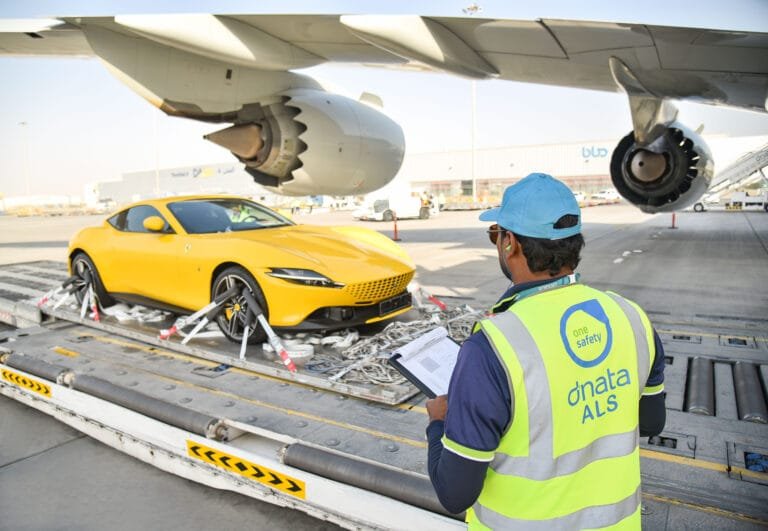
The air cargo industry is accelerating its shift from process automation to data-driven decision-making as operators seek to counter rising costs, capacity constraints and complex regulatory requirements. From integrated screening systems and drone-based inventory checks to predictive maintenance powered by artificial intelligence (AI), digitalisation is emerging as a key driver of operational efficiency and competitiveness.
Growing demand for real-time visibility
The push toward digital transformation has been under way for several years but has gained momentum as global trade becomes more fragmented and unpredictable. Forwarders and shippers now expect real-time visibility across multimodal supply chains, forcing airports and ground handlers to modernise systems that were originally designed for manual, paper-based workflows.
Regulatory agencies are also pushing the pace. The International Civil Aviation Organization (ICAO) and IATA have called for greater use of electronic data interchange to strengthen compliance, particularly around cargo security and customs clearance. This has encouraged many operators to invest in interoperable platforms linking airlines, handlers and authorities via shared digital gateways and APIs.
At Dubai International Airport, dnata has introduced a centralised screening system fully integrated with its Cargo Management System (CMS). According to Guillaume Crozier, dnata’s Chief Cargo Officer, the project “has significantly improved throughput by reducing screening times, optimising resource use, and minimising unnecessary cargo movement.”
Automation and data integration
Automation within warehouses and on ramps is the next area of focus. Ground handling agents are testing autonomous mobile robots (AMRs) to reduce reliance on forklifts, while automated dimensioning and load optimisation tools are being deployed to improve the accuracy of shipment data.
“These technologies allow us to capture precise shipment data, optimise ULD space, and make data-driven decisions that enhance performance,” Crozier said. The company is also evaluating a market intelligence system designed to provide real-time insights into airline operations and customer demand.
Many of these efforts depend on integrating data flows across different parts of the organisation. dnata’s “OneCargo” digital architecture consolidates operational, financial and customer information into a single environment. “AI thrives on data,” Crozier noted. “Our digital transformation is focused on turning that data into actionable intelligence that supports forecasting, predictive maintenance and yield optimisation.”
Similar initiatives are under way at other major cargo hubs including Singapore, Frankfurt and Hong Kong, where digital control towers and IoT sensors track cargo dwell times and equipment status. These efforts mark a shift from process digitalisation to “decision digitalisation”, where algorithms and dashboards directly inform resource planning and service recovery.
Balancing innovation with reliability
Integrating new technology into legacy systems remains one of the industry’s biggest obstacles. Many core cargo management systems were built decades ago and cannot easily accommodate AI-driven tools or cloud-based analytics.
Crozier said dnata takes an incremental approach: “We pilot innovations such as drone technology in controlled environments, gather frontline feedback, and scale only when proven. This balances stability with agility across diverse regulatory and IT landscapes.”
Standardisation is another barrier. Data formats, security requirements and API specifications differ across jurisdictions, forcing operators to rely on close cooperation with regulators and technology partners. dnata’s collaborations with Dubai Customs, DP World and IATA have been central to ensuring new systems meet international compliance standards.
Sustainability and operational impact
Digitalisation is also playing a role in meeting environmental targets. Automated scheduling and dock management systems are cutting fuel consumption and congestion at busy terminals, while digital documentation has sharply reduced paper use.
“Automation doesn’t just make us faster—it makes us more sustainable,” Crozier said. He added that small changes such as digital load planning and auto-generated manifests “add up to meaningful reductions in energy and material use.”
Efficiency gains are measured through a combination of throughput, speed and customer satisfaction. dnata’s Plan-Do-Review (PDR) dashboard tracks key performance indicators in real time, allowing teams to take corrective action immediately.

