
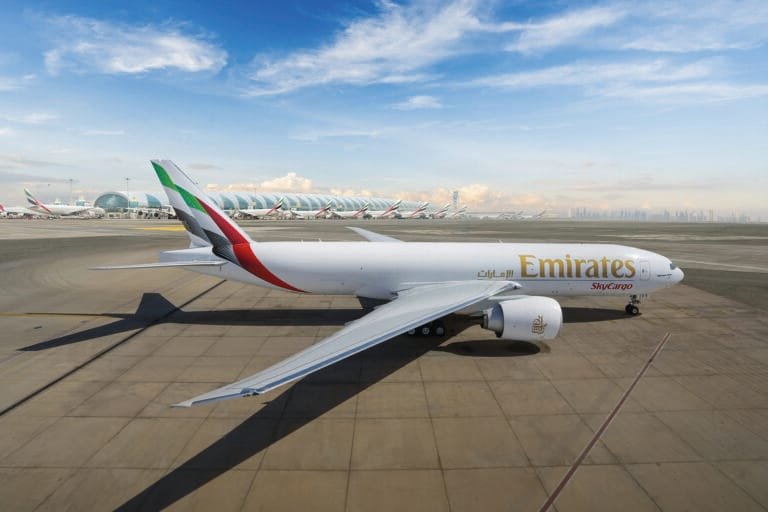
- Emirates SkyCargo is managing Southeast Asia’s fragmented markets with a hybrid model of scheduled freighters, charters, and bellyhold capacity across 25 gateways, adapting capacity route by route to match export mix and local infrastructure constraints
- The carrier is responding to high demand for e-commerce, perishables, and pharmaceuticals by deploying specialist handling, cold chain access, and dedicated freighters, while expanding frequencies and introducing new links to emerging hubs like Da Nang, Siem Reap, Shenzhen, and Hangzhou
- Infrastructure gaps in secondary airports remain a challenge, prompting Emirates to combine freighters, bellyhold, and charters tactically, while preparing for scalable growth as regional manufacturing, e-commerce, and multimodal connectivity continue to expand
Southeast Asia’s importance to global air cargo continues to grow, but carriers face an increasingly fragmented landscape: fast-rising demand in some markets, patchy infrastructure in others. Emirates SkyCargo is navigating this with a hybrid approach — blending scheduled freighters, charters, and bellyhold capacity — to maintain flexibility across 25 gateways in 12 countries and territories.
The carrier now operates 368 weekly flights into East and Southeast Asia, offering 21,000 tonnes of available capacity. While headline numbers show scale, the story underneath is about how Emirates is adjusting to meet vertical-specific demand and working around local constraints — particularly in fast-growing secondary markets.
“2025 has been a big year for Emirates in East and Southeast Asia,” said Abdulla Alkhallafi, Vice President of Cargo Commercial, Far East and Australasia. “In June, we introduced passenger services to Da Nang and Siem Reap, via Bangkok, creating new reciprocal travel and trade opportunities between Dubai and Cambodia and Vietnam.”
With new links to Shenzhen and Hangzhou and a ramp-up in frequency to Taipei, the airline’s SEA footprint continues to deepen — but the way Emirates deploys capacity varies widely depending on infrastructure and export mix.
Network balancing across SEA
Taipei offers a clear example of Emirates’ capacity balancing. In August, the carrier doubled its Dubai–Taipei passenger frequency, adding lift on top of its scheduled freighter.
“Supported with 14 passenger flights and a dedicated freighter, we provide 450 tonnes in and out of Taipei every week,” said Alkhallafi. “We transport key commodities such as computer devices, medical equipment, and vehicle parts; and import fresh salmon, flowers, and pharmaceuticals.”
Emirates has also deployed a dedicated weekly freighter to Narita, complementing its existing freighter operations at Kansai, to better serve Japan’s demand for large-format cargo and direct uplift.
“We deployed a dedicated weekly freighter to Narita International Airport (NRT), boosting capacity by 100 tonnes each way,” Alkhallafi said. “The new freighter enables us to more directly transport large or oddly-shaped shipments to and through Dubai.”
This route-by-route approach has helped the airline respond quickly to volume fluctuations. Emirates now operates 44 scheduled freighters per week into the region — the densest freighter schedule in its global network — alongside 311 weekly passenger flights and 13 weekly charters for long-term clients.
Export flows shift: e-commerce, perishables, pharma
Emirates reports consistent and high-volume demand for e-commerce and manufacturing cargo, with perishables and pharmaceuticals growing steadily across key Southeast Asian origins.
“From Southeast and East Asia, Emirates SkyCargo moves an average of 1,300 tonnes (e-commerce) every week, connecting eRetailers with their global customers,” Alkhallafi said.
Perishables remain a staple export from Vietnam, Thailand and the Philippines — particularly seafood, fruit and vegetables — with reliability and short transfer windows critical to quality retention.
On the pharma side, Singapore remains a mature export base, but growth is accelerating elsewhere. “We’ve seen a steady and sustained growth in pharmaceutical production across Southeast Asia,” said Alkhallafi, pointing to government investment and health sector expansion in Thailand and neighbouring markets. “Thailand has long been a medical tourist destination, driving demand for advanced treatments and therapies, including biopharmaceuticals, vaccines, and precision medicine.”
These verticals demand not only capacity but specialist handling, ground coordination and access to cold chain infrastructure, something not all SEA airports can offer consistently.
Infrastructure gaps still slow the region
The uneven pace of airport development remains a critical issue for operators trying to scale cargo flows in and out of Southeast Asia. Emirates is candid about the constraints it faces.
“One of the key challenges in serving Southeast Asia — especially secondary or emerging hubs — is airport constraints, particularly with runway capacity, cargo terminals, warehousing space and specialist services, such as cold chain facilities,” said Alkhallafi.
While Emirates supports regional infrastructure upgrades, it’s adapting in the meantime with tactical deployment: freighters into capable hubs, bellyhold on high-frequency lanes, and charters for reliable uplift where needed.
“There are a number of large-scale investment projects focused on building up infrastructure,” Alkhallafi added. “This will help drive better access for global customers to reach more of Southeast Asia, and Southeast Asian businesses to connect to global marketplaces more seamlessly.”
Looking ahead, Emirates expects Southeast Asia’s export profile to diversify further — with infrastructure racing to keep up. As more manufacturers shift into Vietnam, Thailand, and the Philippines, and e-commerce accelerates cross-border flows, the need for scalable, multimodal capacity will grow.
“Over the last few years, we’ve seen the evolution of global supply chains as manufacturers, distributors, and suppliers diversified their production hubs, targeting new destinations in Southeast Asia,” said Alkhallafi.
Technology and automation will play a growing role, but Emirates emphasises that operational agility — not just digital tools — will define the next phase of connectivity.
“The future of a technology-driven supply chain and air freight operation is fast, connected, and intelligent,” Alkhallafi said. “This future will not only boost efficiency and customer experience but also support the sustainable long-term growth of the industry.”

